|
Information on how to groom your Havanese
The Havanese has been described as non-shedding. Actually, it loses its hair
more like humans do.
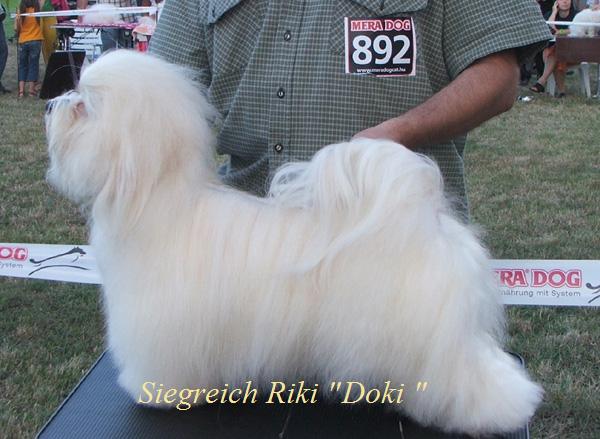
The Havanese has an abundance of long silky
hair.
Regular brushing is one of the most important things you can do to keep your pet
healthy and happy.
Brushing:
. Removes dirt and debris
. Invigorates the skin
. Spreads oils to moisturize skin and keep its coat shiny
. Prevents mats and tangles which are irritating and painful and can harbour
bacteria, fungus and other infection
. Keeps your house clean, especially during shedding seasons
. Bonding, massaging, loving interaction
. Early detection of fleas, ticks, eczema, infection and smells that may alert
you to sickness
Tools: Slicker, Pin Brush, Medium and Fine-toothed Hybrid Comb, Spray
Conditioner
Line brushing consists of holding hair up and out of the way and then
brushing/detangling a small amount of hair, a line or row, at a time from
underneath.
Always work from the inside out on a coat and from the bottom to the top of the
hair.
Brace the skin of your dog with one hand while working on knots, and always
brush in the direction of hair growth.
Your Havanese has an abundance of hair. There is no hard and fast rule about
where to start.
Use a soft-tipped pin brush for most brushing. Use the slicker for feet and
tangles. Use the comb for tangle and to finish.
Eyes: Check your dog's eyes daily.
Debris is flushed to the corners of the eyes and daily wiping with a wet cloth
or paper towel can prevent the build up of bacteria.
You should also use a cotton ball to clean around your Havanese' eyes.
Ears: Check ears once a week.
Your dogs ears should be pink and healthy inside. If not, don't do anything to
them until you see a vet. Keeping your dogs' ears clean minimizes odour, removes
dirt, bacteria and mites trapped in wax. Never use a cotton swab on the inner
ear.
Ear Hair Plucking: Every two weeks.
Hair growing into the ear canal can prevent the canal from drying properly and
trap bacteria, causing infection.
Tools: cotton wool balls or soft cloth and ear solution.
There are solutions made specifically for dogs but substitutes include: hydrogen
peroxide, alcohol, mineral oil, witch hazel, and tea tree oil.
Place a few drops of ear solution in ear and rub and massage to loosen wax. Swab
out with cotton wool balls or cloth.
Teeth: Regularly.
Brush your Havanese' teeth? Yes. 80% of 3 year old dogs have periodontal
disease. Cavities and gum disease are painful for your dog; they diminish its
pleasure and ability to eat. Bacteria that develops can infect the heart,
kidney, liver and brain. Really bad breath is usually a sign of gum disease.
Tools: Toothbrush/finger cap/cloth, doggie toothpaste, tooth scraper.
Never use human toothpaste. It is not edible.
Starting this dog off with this practice takes patience.
Reward it constantly.
Start off by getting it used to its mouth being handled.
Progress to touching the teeth with your finger.
Get some meat-flavoured toothpaste and apply with your finger.
Then introduce the brush. Clean a few teeth at a time and soon you will have a
routine that takes just minutes.
Brush in a circular motion and get under the gum line.
If you don't want to brush everyday, use a tooth scraper once or twice a month
to get rid of the build up of plaque. It accumulates mostly on the outside of
the teeth and on the back molars. This won't be much fun for your or your dog
though. Lots of bones and hard, crunchy foods can minimize plaque but not to a
truly effective degree.
Nails: Every two weeks.
Nail care is very important for your Havanese. Nails that aren't trimmed can
splinter and infect the quick or grow and curl into the flesh. This can be
painful for your dog to walk on. It will affect its gait, posture, and
eventually it's skeletal and ligament health. Nails should never touch the
ground. When your dog is standing its nails should rest above the ground. If you
hear clicking on the kitchen floor, clipping is overdue.
Tools: Doggie Nail Clippers (scissors, pliers, guillotine), Dremel or
file, Styptic or Kwikstop.
Introducing your dog to nail clipping should start off by getting it used to its
paws being handled. Stroke, touch and play with your dog's paws whenever you are
giving it affection.
Getting it used to the Dremel is your best bet to avoid clipping altogether.
Sit beside your dog and put your arm around it. Gather it up so that you are
clipping from underneath and at the right angle.
Lift the paw and press on it to expose the claw.
If it has a clear nail you should be able to see the quick: a dark bundle of
nerves and blood vessels. Clip from underneath close to the quick but do not cut
into it. If you do, your dog will soon let you know. Use Styptic pencil or
Kwikstop to staunch the bleeding.
Buff the ragged edge with a file or Dremel.
If it has a dark nail, clip just under the curve of the nail and then you will
be able to look inside and see the quick if you look close enough. Clip using
tiny snips at a time.
Don't forget to check for dewclaws: an extra claw dogs may have farther up on
the leg that works like a thumb. It is better to clip your dog's nails
frequently as this encourages the quick to recede farther away from the tip.
Paws: Check daily/Trim every two weeks.
It is very important to Check between your dogs pads for foreign objects that
may have wedged there and check the pads themselves for cuts, scrapes and
infection.
Tools: Small, blunt scissors, slicker brush or comb.
The Havanese has hair that grows between its pads. This hair can mat and trap
bacteria, besides becoming painful to walk on.
Trim hair around the paws to keep them clean. Only do this when the dog is
standing on the paw.
Then, Push the feathers growing on top of the foot down through the toes and
trim to pad level.
Lift the paw and from the back, brush out the hair and trim to pad level.
Push feathers back up through the toes and trim from the top.
Hygienic trimming: 2 to 4 weeks.
Tools: Blunt-nosed scissors, Thinning Shears, Electric clippers
Trimming at the front of ears, under the tail and around the privates keeps your
dog feeling better as well as keeping it and your house cleaner.
Expressing Glands: Every 2 to 4 weeks
This is a task normally done when you take your dog in for professional
grooming. Your dog uses scent glands in the anus to mark its territory.
These glands also excrete when your dog defecates. At times, they may get
impacted. Signs of this include: increased doggie odour, excessive licking and
chewing of the behind and worst of all, scooting (when your dog drags its bottom
along the floor or carpet).
There is no risk of overly expressing these glands so it's best to get
accustomed to doing it regularly as it will lessen dog odour.
Tools: Warm cloth
Lift the dog's tail and hold the cloth against it's behind. Place your fingers
at 5 o'clock and 7 o'clock and press inward and squeeze to expel.
Bathing: As needed
Havaneses do not need regular bathing. Natural oils to in their coat moisturize
their skin and keep them resistant to dirt and water. Stripping these oils with
frequent bathing dries out the skin and prevents you dog from having a healthy
coat.
A rubdown with a damp towel can remove dirt and spot cleaning is always an
option. With regular brushing, ear cleaning and gland expression, dog odour will
remain minimal.
Bathing a few times a year is usually adequate.
Tools: Non-slip mat, sprayer hose, dog shampoo, conditioner, towels.
Choose a place where you can block escape routes and expect 1-3 water-spraying
shakes.
Never bathe your dog in standing water and never use human shampoo.
Wet your dog using your hand to massage and lift hair to thoroughly soak.
Avoid getting water into the eyes, nose and ears.
Cotton wool can be stuffed into the ear canal to deter water.
Massage shampoo into lather.
Rinse thoroughly as leftover shampoo can severely dry out and irritate your
pet's skin.
Condition.
Rinse and squeeze off excess water by running your hands along its body and
pressing down gently.
Dry with a towel.
Blow-dry and comb on low heat.
The Salon Treatment:
If you want to show your Havanese the only scissoring that is allowed is of the
feet.
If you're not interested in showing your Havanese, there's much fun to be had
with all this hair, particularly the head hair: braids, topknots, or bangs.
|